A sponsored article in a respected publication can raise awareness of a brand, support its expertise and bring in qualified visitors. It is still paid content. Google therefore asks that the links it contains be labelled as such, and the way to handle this belongs in the preparation of the order, not in a correction after publication.
This guide covers what Google expects from a sponsored link, what an advertiser can check on their own and what to write in the brief so that the publication and the brand agree on the same rules.
What Google asks for a paid link
Google separates editorial links, chosen freely by a publication, from links obtained in exchange for something of value. For the second group, its documentation on qualifying outbound links recommends the rel="sponsored" attribute. The rel="nofollow" attribute is still accepted. Either one tells the search engine that the link is not a spontaneous recommendation.
A paid link left without an attribute can be treated as an attempt to manipulate rankings. The risk is not limited to the site receiving the link: the publication that carries it may also see the trust given to its outbound links decrease. A serious publication applies this rule on its own, and it is normal to find it in its terms.
Why the article keeps its value
A qualified link does not make the article pointless. The value of a sponsored article comes first from the readers it reaches: an audience that matches your target, a credible editorial context and a text that answers a real question. These effects exist whether or not the link passes ranking signals.
An article read by the right decision makers can lead to searches for your brand, direct visits, demo requests or mentions elsewhere. None of these outcomes is guaranteed, and none depends on the link attribute. This is why the choice of publication should start from its audience and editorial line rather than from a ranking promise.
What to check before you order
Before you approve an offer, a few simple checks prevent unpleasant surprises:
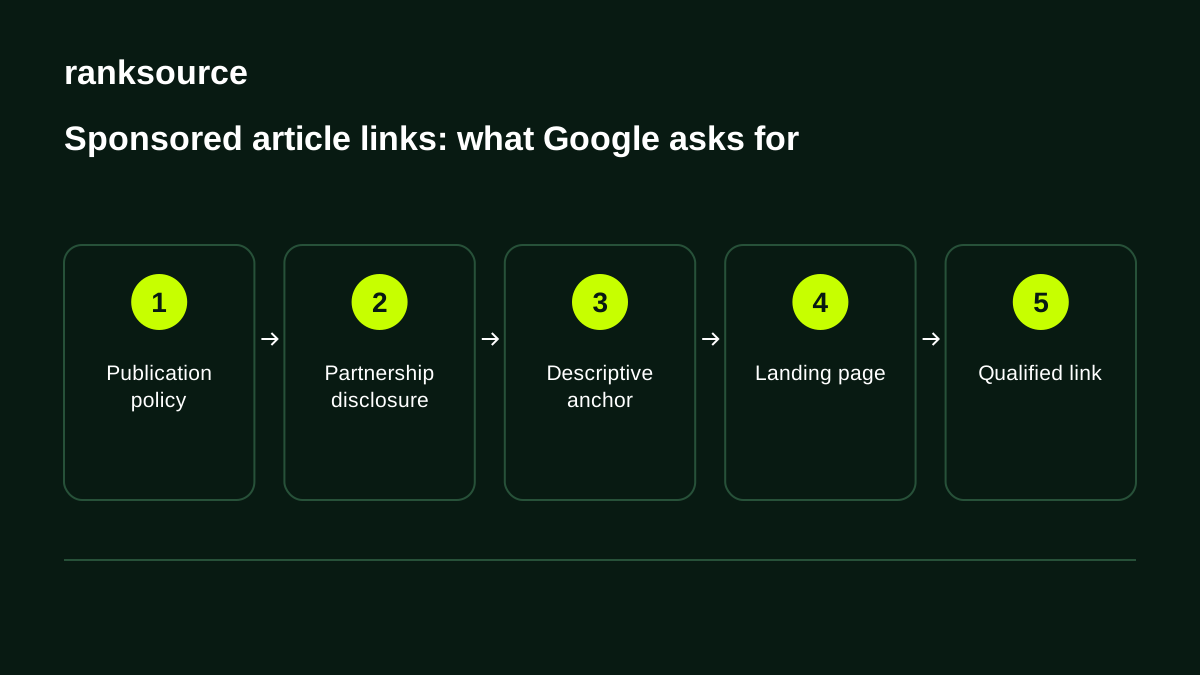
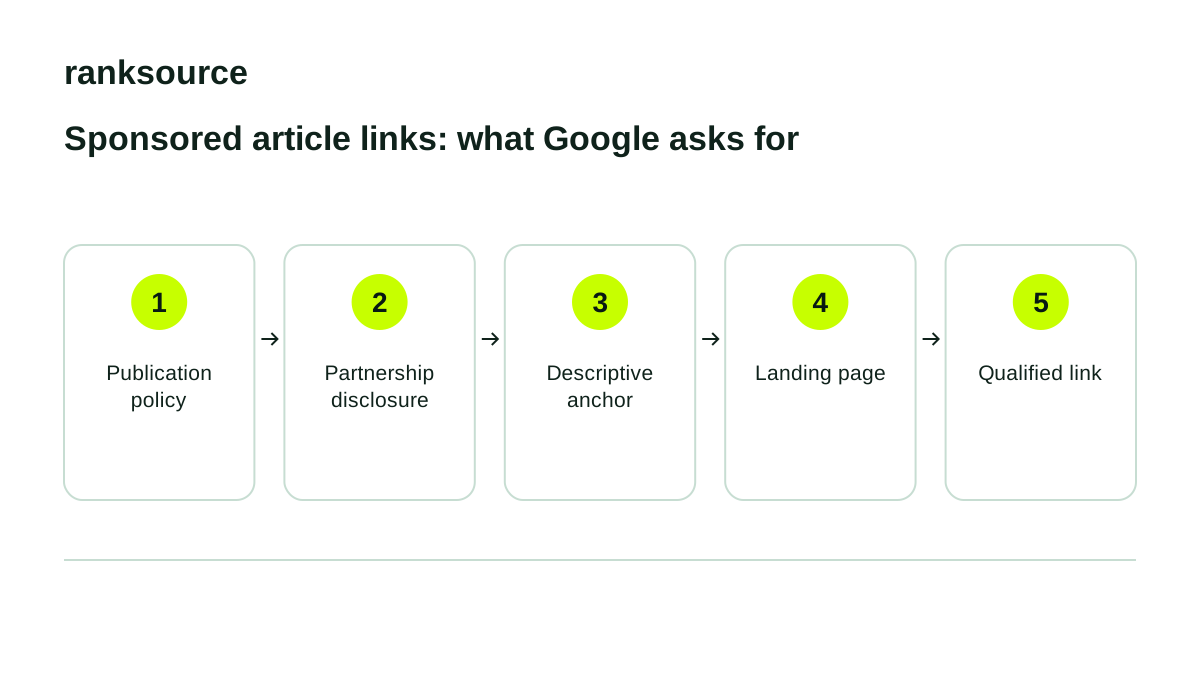
- The publication link policy. Ask how it labels links in paid content. A clear answer is a good sign; a publication that offers to leave a paid link without an attribute takes a risk for itself and for you.
- The partnership disclosure. Check how the article will be flagged to readers: a note at the top, a label or a dedicated section. This transparency protects the credibility of the publication as much as yours.
- The number and placement of links. One or two useful links, placed where they help the reader, are worth more than a pile of commercial anchors.
- How long the article stays online. An article that remains available for a long time keeps serving as a reference, even with a qualified link.
Write for the reader before the search engine
Google keeps saying that it wants to surface helpful, reliable, people-first content. A sponsored article is no exception. A text that brings concrete information, precise examples and a reasoned point of view will be better received by the publication, by its readers and by search engines.
On the other hand, a text written around an anchor, with repeated keywords and little substance, may be turned down by the editors or go unnoticed. The brief should therefore set the angle, the question the article answers and the evidence available, before it mentions links at all.
Choose natural anchors
The anchor is the clickable text of the link. In paid content, it should describe the destination page honestly: your brand name, the title of a resource or a descriptive phrase. An over-optimised anchor that repeats a commercial query word for word draws attention without giving the reader anything.
Also point the link to a page that keeps the promise of the article. If the text discusses a method, the landing page should explain it. If the article presents a study, link to the study itself rather than to the home page.
What to put in the brief
The brief is the right place to remove ambiguity. State the page to link and the preferred anchor, and leave the link qualification to the publication according to its policy. Specify the expected partnership disclosure, how long the article stays online and the number of links. Add the sources the article may cite, so that the text remains verifiable.
The features of ranksource bring this information together when you order: disclosure options, duration and guidelines are visible before payment, so you can compare publications on the same basis.
What to do if the publication does not qualify the link
Sometimes a publication releases paid content with a link that has no attribute, by oversight or out of habit. Point it out as soon as you review the published article and ask for rel="sponsored" to be added. The fix takes a few minutes and protects both sides.
If the publication refuses, or presents the missing attribute as a benefit of its offer, treat it as a signal about its editorial practices. A publication that ignores Google public guidance on paid links may also apply looser rules elsewhere: proofreading, partnership disclosure or the upkeep of its archives. Keep a record of the exchange, then take it into account when you choose the publications for your next campaign.
In short
A sponsored article link is qualified with rel="sponsored" or rel="nofollow", and a serious publication does it on its own. The value of the article comes from its audience, its context and the quality of the text. Prepare these points in the brief, choose descriptive anchors and judge the campaign on what it really brings to your readers.