
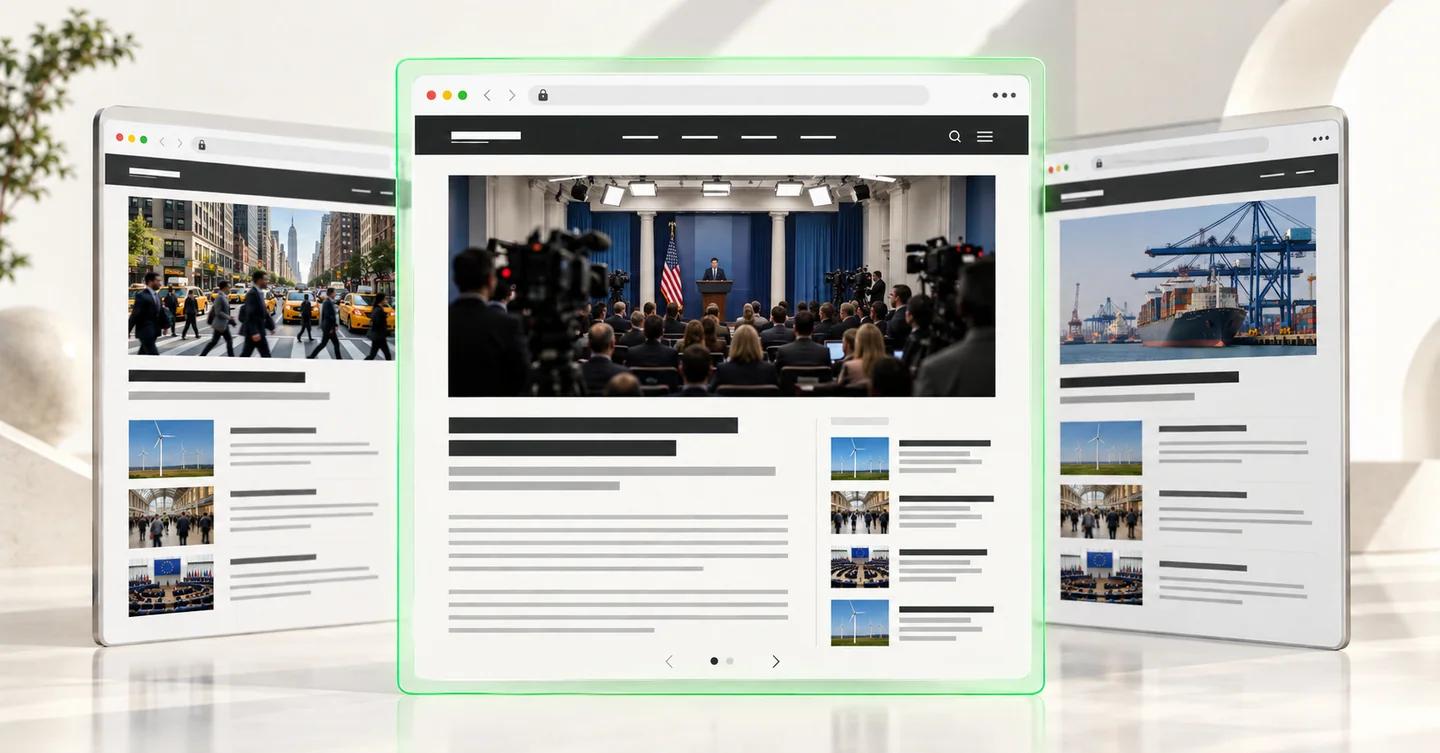
Two outlets are on your list. The first shows the highest traffic; the second publishes weekly features for a narrower readership. Which one serves the reader you want to reach? The answer is an editorial trade-off, and a table of figures supplies only part of it.
Fictional example. A maintenance software company wants to speak to industrial operations managers in France. Its article explains how to prepare a production shutdown and links to a detailed method written in French. This case runs through the whole piece. The outlets and observations in it are invented and do not correspond to any real listing.
Define your reader before opening the catalogue
One sentence is enough: “We want to explain this topic to this reader, in this market, to help them make this decision.” If it stays vague, no ranking of domains will sharpen it for you.
Next, decide what you will be able to observe after publication: fidelity to the approved angle, visits to your resource, or qualified enquiries. An awareness objective calls for a specific measure, such as a suitable survey, planned from the start. A position in search results cannot be promised by ordering a sponsored article, and your choice of outlet should not rest on that promise.
Domain, section, article: three levels of audience
The figures you will meet do not all describe the same thing. Sorting them by level avoids comparing quantities that cannot be compared.
The domain
Depending on the listing, the ranksource catalogue shows a ranksource score and indicators such as estimated organic traffic, ranking keywords or referring domains. These data cover the whole site. They help sort a first list, but they cannot assess the section where your text will appear.
The section
This is the decisive level for your project. An Industry section and an Economy section of the same title have neither the same readers nor the same expectations. The section’s recent publications, their tone and their level of detail are the best evidence available.
The article
No domain-level figure measures the reads your future text will get. If the decision depends on it, ask the outlet for an audience indicator specific to the section, and note its supplier, date and scope.
Eliminatory criteria and trade-offs
Before awarding points, fix what disqualifies a candidate. In our fictional case, a publication language that your team cannot have reviewed removes the outlet, whatever its score. A high total does not make up for a limit of that kind.
For each remaining candidate, mark “confirmed”, “to verify” or “out of scope”, with the source and date of the information. Six points structure the comparison:
- Intended reader. Does the section address the role, sector and country you are after? Keep examples of articles.
- Editorial context. Does the angle fit among recent topics? A catalogue category is not enough to establish that.
- Language and market. Can the article be written, reviewed and approved in the publication language? That language may differ from the audience’s main country.
- Offer conditions. Format, any writing support, approval steps, duration, sponsored labelling, promotion.
- Measurement. Which indicator, which supplier, which date, which scope?
- Price excluding tax. Compare prices excluding tax, in the same currency, for equivalent services.
Trade-offs begin when two candidates pass the filters. A narrower but perfectly targeted outlet can beat a more visible general-interest title; the reverse is justified if your goal is awareness among a broad public. Put that choice in writing, because it shapes how you read the results afterwards.
Read the section before choosing the outlet
In the catalogue, filters for country, language, category, format and budget produce the list, and the “Premium and selected” option can narrow it. Then open each retained title and read three recent articles from the intended section. Do their subject, level of detail and vocabulary match your reader? Has the outlet already covered your question? A neighbouring angle can be developed further, while an identical repetition is a reason to revise the proposal.
The Reuters Institute Digital News Report 2026 reports overall trust in news of 37% across 48 markets. Our reading: the figure describes a general climate of trust or distrust. It says nothing about the trust placed in a particular title, or about the effect of a sponsored article. Its practical use is to push you to justify each outlet by its own editorial context rather than lend it an assumed overall reputation.
Two candidates, two decisions
The Industry section of the first outlet publishes practical features for site managers. Reader and angle look consistent. The displayed traffic, however, covers the entire domain, and the approval process is unknown. Decision: keep the candidate and request the publication conditions along with an audience indicator specific to the section.
The Economy section of the second outlet reaches the right market, publishes in French and occasionally covers industrial investment. Its latest texts, though, show no operational content aimed at operations managers. Decision: ask for closer examples, otherwise remove the candidate. Higher traffic does not close a gap in subject matter.
The two decisions differ because the evidence differs. The first candidate has a favourable editorial signal and practical unknowns; the second has a large audience and a weak editorial signal.
Publication conditions: duration, guarantee, visibility
A sponsored article format should let you distinguish what your team supplies, the writing support offered, the publisher’s approval stages and what will actually be published. The outlet’s editorial line remains sovereign over the angle and version accepted. Your team or agency prepares the brief and follows the exchanges without removing that control.
On links, Google Search Central advises qualifying links from paid placements with sponsored, its preferred option, or nofollow. Check the outlet’s conditions before ordering. The treatment of the link should be explicit; a technical qualification is not a promise of ranking in Google.
Duration deserves a careful read. On ranksource, an offer states either a fixed duration of 1 to 60 whole months or “No time limit”. The ranksource guarantee follows the fixed duration purchased, capped at 36 months, and is 36 months for an offer with no time limit. The publication is checked daily through day 30, or until expiry if that comes earlier, then monthly until the guarantee ends.
If an issue arises, correction, restoration or an equivalent republication is sought first; reimbursement follows the offer conditions if nothing succeeds. Temporary promotional visibility, such as a featured placement, is a separate service: lasting presence in an archive does not imply permanent exposure on a homepage. Compare prices excluding tax with those differences in mind.
Approval note for the fictional case
Four lines are enough for your team to confirm or challenge the choice of the Industry section:
- Reader: industrial operations manager in France.
- Angle: preparing a production shutdown with an operational method.
- Evidence: three recent articles in the section address production constraints.
- To confirm: approval stages, publication duration, section audience data, price excluding tax.
Add the reason for removing the Economy section: it will spare you the same research on the next campaign. Teams handling several markets can reuse this grid in campaigns for agencies, adapting angle and language to each outlet.
Your shortlist is ready once the reader, angle, offer and open points fit on one page. Compare media outlets in the marketplace to prepare your campaign.